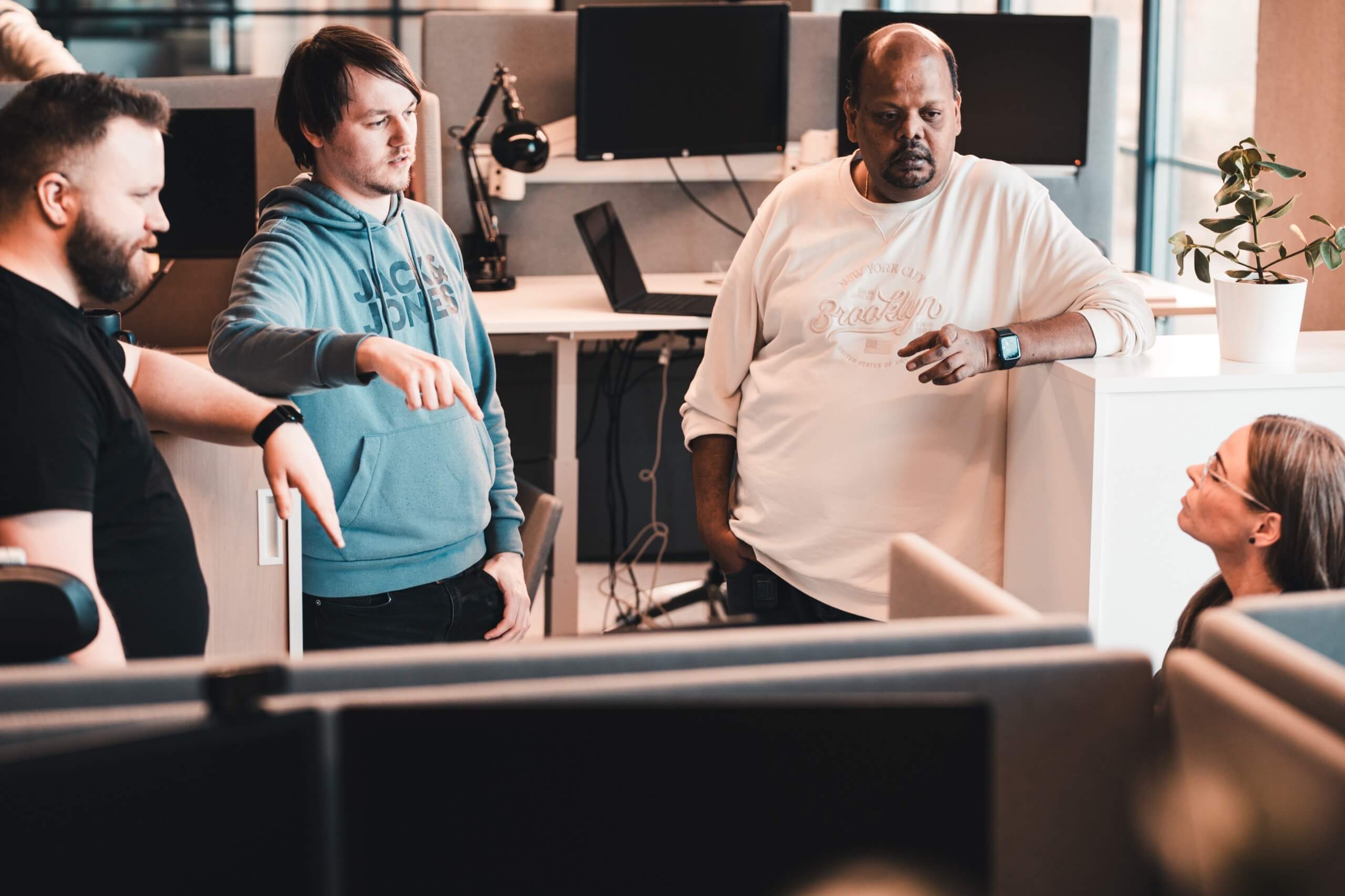
A continuous improvement culture is not built through posters, slogans, or weekly targets. It grows through the way people work each day. The companies that move forward the fastest are the ones that treat improvement as something natural. They solve problems together as soon as they appear. They do not wait for a review cycle or a meeting next week. They spot an issue, talk about it, and move.
These 5 steps give a clear and practical guide for leaders who want improvement to become part of the organisation’s everyday rhythm.
Step 1: Make it safe for people to speak up
Every improvement starts the moment someone notices that something could work better. In many companies, people stay quiet because they fear being dismissed or ignored. A strong improvement culture removes that fear and replaces it with trust.
Teams need to know that ideas are welcome, encouraged, and valued. Nordic thinking helps here. Openness, shared responsibility, and honesty create a foundation where people feel comfortable raising ideas that can make the work easier, faster, or better.
There are real world examples that show this in action. HYPE Innovation has a clear and practical overview of how open communication and idea sharing can build a culture of continuous improvement. You can find their guide HYPE Innovation continuous improvement guide.
Step 2: Turn every idea into a shared conversation
Once someone raises an idea, do not pass it up the chain or place it on a long list. Bring the team together and start a conversation around one question.
How can we make this better
This moment is where ownership starts to grow. The people who live the work understand the details. They see the friction points, the workarounds, and the places that slow them down. When they help shape the improvement, they naturally carry it forward and keep it alive.
The Japanese Andon system shows how powerful this can be. Anyone on the production line can stop work the moment they spot a problem. Leaders arrive, thank them for raising it, and the whole group solves it together. It is an approach built on respect, trust, and shared responsibility. Toyota explains the Andon concept clearly real-world continuous improvement examples.
Step 3: Act fast when the solution is simple
Many improvements do not need planning sessions or long discussions. If you can improve something immediately, do it immediately. Small changes made fast build confidence inside the team. People learn that raising an idea does not lead to bureaucracy. It leads to action.
The faster the cycle from idea to improvement, the more ideas appear. Momentum builds and improvement becomes part of the culture rather than an occasional project.
Step 4: Adapt the pace to the size of the problem
Not every improvement is simple. Some affect several parts of the operation or require deeper thinking and more people. This is where clarity matters.
- Look at the scale of the issue.
- Look at who needs to be involved.
- Look at the potential impact.
Then choose the right pace. Move quickly where it makes sense and take more care where it is needed. The aim is to create consistent progress, not speed for the sake of it.
Step 5: Measure progress by how the work feels
Numbers are important, but they rarely show the first signs of progress. Many improvements sit inside larger systems where the measurable effect appears slowly. The most honest and immediate signal comes from the people doing the work.
- Do they feel less blocked
- Do they feel that things run smoother
- Do they feel more energy in the work
- Do they feel that the change actually helped
When the team feels the difference, the improvement is real. Over time, the numbers will follow. You will see better flow, fewer issues, less rework, reduced support needs, and a better experience for users.
A continuous improvement culture does not begin with a big programme. It begins with small consistent actions. Someone notices something. Someone speaks. People gather around it and solve it together. The more often this happens, the stronger the culture becomes. Eventually it becomes part of who the company is and how it works.
You can read more on the continuous improvement culture guide.
This is how teams stay sharp. This is how progress becomes natural. And this is how companies grow through the people who care enough to improve things every day.
About the Author
I started turning spanners at sixteen and went on to lead global support for some of the world’s most demanding industries. I’ve built a reputation for challenging the traditional ways of doing things, and pushing the limits of what’s possible.
From transforming operations at Volvo to building human-centred support models at Sigma Technology and now FIXATE, I lead with clarity, care, and courage. I see the big picture, sweat the details, and always try to do what’s right, even when it’s hard.
If something’s worth doing, I want to do it properly. And I’m probably already thinking about how to make it better.
Read more from the author